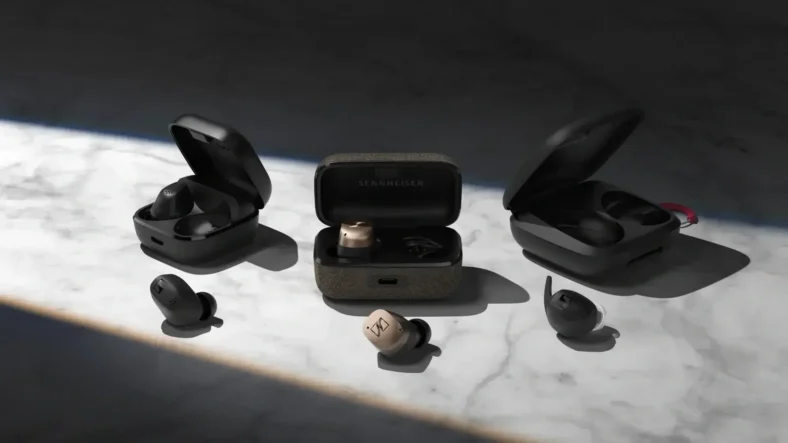
True wireless earbuds have accomplished something remarkable: they made us willingly give up the headphone jack. Apple’s AirPods, launched in 2016 to widespread ridicule, have become one of the most successful products in history, spawning countless imitators and creating an entirely new gadget category. The tiny computers we insert in our ears represent a triumph of miniaturization, battery engineering, and user experience design.
True Wireless Earbuds: Freedom From the Cord
The core innovation enabling true wireless earbuds is the Bluetooth chip. Apple’s custom H1 chip (and similar chips from Qualcomm, MediaTek, and others) manages wireless connectivity, audio processing, and power efficiency in a tiny package. Each earbud is an independent computer, communicating with the paired device and with each other, synchronizing audio so both ears hear the same thing without noticeable lag.
The charging case is equally ingenious. It solves two problems simultaneously: protecting the earbuds when not in use and providing multiple additional charges. The case itself charges via Lightning, USB-C, or wireless Qi, and top-up charging means the earbuds are almost always ready when needed. The satisfying magnetic click as earbuds seat into place has become a tactile signature of the category.
Battery life has steadily improved. Early models offered around two hours of listening time; current flagships deliver five to eight hours per charge, with cases providing twenty to thirty additional hours. Fast charging provides an hour of listening from just five to ten minutes of charging. For most users, battery anxiety has been largely eliminated.
Sound quality has evolved from merely acceptable to genuinely impressive. Advanced drivers, custom amplifiers, and sophisticated digital signal processing deliver rich, detailed audio. Adaptive EQ adjusts frequency response based on fit and ear shape. Features like spatial audio with dynamic head tracking create immersive listening experiences previously possible only with multi-speaker systems.
Active noise cancellation (ANC) transformed the category. By using external microphones to sample ambient sound and generating inverse waves to cancel it, ANC earbuds create a private listening bubble. The effect is magical: airplane roar, office chatter, city noise simply disappears. Transparency modes reverse this, piping in outside sound when needed for safety or conversation.
The microphone array enables surprisingly good call quality. Beamforming microphones focus on the speaker’s voice while rejecting background noise. Wind reduction algorithms further improve clarity. For many, earbuds have replaced phone handsets entirely, handling all voice calls with convenience.
Integration with voice assistants—Siri, Google Assistant, Alexa—adds hands-free control. A simple “Hey Siri” can initiate calls, set reminders, check weather, or control music without touching the phone. This convenience reinforces the ecosystem lock-in that makes the category so strategic for tech giants.
Fit remains subjective. The one-size-fits-all approach of early models has given way to multiple ear tip options and even custom-fit solutions. But anatomy varies enormously, and some users simply cannot find comfortable, secure-fitting earbuds. This remains an inherent limitation of the form factor.
Health and safety considerations are emerging. Long-term, high-volume listening can damage hearing. Some users report discomfort or ear infections from prolonged wear. Awareness features that monitor listening habits and warn about excessive volume are becoming standard.
Environmental impact is concerning. Earbuds contain batteries, circuit boards, and rare materials, yet their small size makes recycling difficult. They are essentially disposable electronics with limited lifespans. The category’s rapid growth means millions of tiny devices will eventually need responsible disposal.
True wireless earbuds represent a category-defining gadget: small enough to forget you’re wearing them, capable enough to handle most listening needs, and convenient enough to become habitual. They have changed how we experience audio, creating private soundscapes in public spaces and making music, podcasts, and calls constantly available. The cord is gone, and we’re not going back.