Climate change is the defining environmental challenge of our era, yet confusion persists about basic facts. The science is clear: Earth is warming, human activity is primary cause, and consequences are already unfolding. Understanding this issue requires grasping both physical science and human dimensions.
Understanding Climate Change
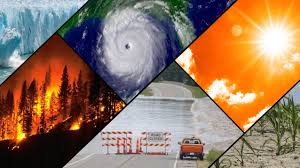
The greenhouse effect is natural and necessary. Certain gases—carbon dioxide, methane, water vapor—trap heat in atmosphere, keeping Earth about 33°C warmer than it would be otherwise. Without this effect, life as we know it would not exist. Problem began when human activity started adding extra greenhouse gases, strengthening the effect beyond natural levels.
Carbon dioxide is primary concern. Since Industrial Revolution, burning fossil fuels (coal, oil, natural gas) has released enormous CO₂ previously locked underground. Deforestation eliminates trees that would otherwise absorb CO₂. Atmospheric CO₂ has increased from about 280 parts per million pre-industrially to over 420 ppm today, highest in at least 800,000 years.
Methane is more potent but shorter-lived. Released from agriculture (especially livestock), landfills, and fossil fuel extraction, methane traps about 80 times more heat than CO₂ over 20-year period. Reducing methane emissions offers relatively quick climate benefit because it degrades faster.
Temperature increase is accelerating. Earth has warmed about 1.2°C since pre-industrial times, with most warming occurring in last 50 years. The Paris Agreement aims to limit warming to well below 2°C, ideally 1.5°C. Beyond this threshold, scientists warn of tipping points—irreversible changes like ice sheet collapse or Amazon dieback that accelerate warming further.
Evidence extends beyond temperature. Sea levels have risen about 8-9 inches since 1880, accelerating due to melting glaciers and thermal expansion (water expands as it warms). Arctic sea ice is declining rapidly. Glaciers worldwide are retreating. Growing seasons have shifted. Species are migrating toward poles and higher elevations. Extreme events—heatwaves, heavy rainfall, droughts—are becoming more frequent and intense.
Climate models have proven remarkably accurate. Using physics-based equations, they simulate climate system and project future scenarios under different emission pathways. Models predicted warming that subsequently occurred, building confidence in their projections. Uncertainties remain about exact timing and regional details, but overall direction is clear.
Human health consequences are numerous. Heat waves kill directly. Disease vectors expand into previously cooler areas. Air pollution from fossil fuels causes millions of deaths annually. Food and water security threaten. Mental health impacts from extreme events and existential anxiety are increasingly recognized. Climate change is health emergency.
Economic impacts are substantial. Damage to property from extreme events. Agricultural disruption. Productivity losses from heat. Supply chain interruptions. Migration and conflict. The Stern Review famously concluded that climate change is “greatest and widest-ranging market failure ever seen,” with costs far exceeding those of prevention.
Mitigation means reducing emissions. Transitioning to renewable energy (solar, wind, hydro, geothermal). Improving energy efficiency. Electrifying transportation. Reducing deforestation and restoring ecosystems. Developing carbon capture technologies. These actions require transforming global energy system, historically unprecedented but technically feasible.
Adaptation means preparing for unavoidable changes. Sea walls protect coastal cities. Drought-resistant crops maintain food production. Cooling centers protect during heatwaves. Improved building codes withstand extreme weather. Both mitigation and adaptation are necessary; they are complements, not alternatives.
International cooperation is essential because climate is global commons. Emissions anywhere affect everyone. The United Nations Framework Convention on Climate Change facilitates global negotiations. The Paris Agreement, signed by nearly every country, establishes framework for voluntary national contributions. Implementation remains insufficient.
Individual actions matter but are insufficient alone. Reducing personal carbon footprint—flying less, eating less meat, improving home efficiency—is valuable but cannot solve problem without systemic change. Collective action through policy, innovation, and cultural shift is required. Understanding climate change means recognizing both urgency and agency.